Jewish Ethics Here and Now
  • Home
  • for students
    • Experiential assignments >
      • Mussar experiential assignment
      • climate change experiential assignment
      • Peacemaking within ourselves
    • canvas
    • tips for students
  • Issues
    • Social media and shaming
    • "fake news"
    • whistleblowing
    • workplace ethics
    • Violence and peacemaking
    • Climate Change
    • public safety
  • Jewish ethical concepts
    • pikuach nefesh: saving a life
    • kvod habriyot: human dignity
    • geneivat da'at: honest representation
    • lashon hara: ethical speech
    • lifnei iver: stumbling block
    • bal tashchit: do not waste
    • tochecha: rebuke
    • mussar: jewish character ethics
    • tzedek: justice
  • Resources
    • what's applied ethics? >
      • Applied Ethics etext
    • Sample Syllabus
    • learn about Judaism >
      • Judaism basics >
        • The Torah
      • Jewish religious diversity in the U.S.
      • jewish communities around the world
      • antisemitism
      • the pluralism project
    • ethical wills
    • social science and ethics

climate change

What do Jewish sources say about our responsibilities regarding climate change?
Why are some people skeptical about climate change?
What are greenhouse gases and why are they a problem?
How are we increasing the concentration of greenhouse gases in our atmosphere?
How could we organize our lives to reduce climate change?

i. climate change basics
Picture
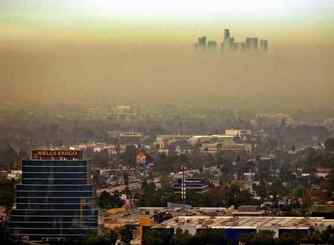
Smog in Los Angeles, 2003.

ii. obstacles to stopping climate change
Picture
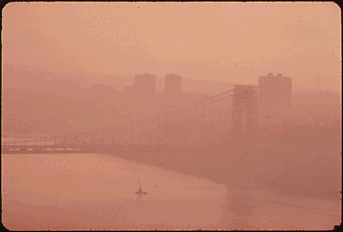
The George Washington Bridge in heavy smog (New York/New Jersey).

iii. ethics and climate change

Last Week Tonight with John Oliver: Climate Change 
(Warning: there's some coarse language in this video clip.)
  • How does John Oliver propose to remedy the problem of skepticism about climate change?

National Academy of Sciences and The Royal Society, Climate change: evidence and causes.

Margaret E. Atwood, “It’s not climate change—it’s everything change.” Matter.

​Max Fisher. "Map: These are the cities that climate change will hit first." Washington Post, October 9, 2013.
  • How old will you be when Los Angeles reaches climate departure at our current rate of climate change, and how old will you be if L.A. reaches climate departure at a slower rate of climate change?

Suzanne Goldenberg, “Exxon knew of climate change in 1981, email says—but it funded deniers for 27 more years.” The Guardian, July 8, 2015.
  • Why does the article compare Exxon to tobacco companies?
  • Why did Exxon decide not to develop the Natuna gas field?
  • Why did Exxon spend billions denying climate change publicly when it had accepted privately that climate change was real?

​Monte Morin, “Americans use twice as much water as they think they do, study says.” Los Angeles Times, March 3, 2014.
  • What do most Americans think they should do to conserve water, and what actions would actually yield the greatest water savings?

​Catherine Wolfram and David Zetland, "Water conservation's other benefit: It's a power saver." Los Angeles Times, March 3, 2014.


​Dennis Patrick O’Hara and Alan Abelson, “Ethical response to climate change.” Ethics and the Environment 6:1 (2011), 25–50.
  • Greenhouse gas (GHG) emissions have been disproportionately produced by developed, wealthy countries while the effects of greenhouse gases have been born disproportionately by poorer, developing countries. What models does this article present to try to address this disparity?
  • What ethical principles underlie these models?

Nives Dolsak, Aseem Prakash, and Maggie Allen. "The big fight over the Dakota Access Pipeline, explained." Washington Post, Sept. 20, 2016.

Mark Sundeen. "What's happening in Standing Rock?" Outside. Sept. 2, 2016.
  • How do the people described in Sundeen's article understand environmental racism to be a factor in climate change and in the building of the Dakota Access Pipeline?

Arthur Green, "Judaism and Creation Theology." Sh'ma: A Journal of Jewish Ideas, June 1, 2008. 
  • Why does Green distinguish between scientific thinking and religious language?

Jay Michaelson, “Climate change is a sin. Here’s how to repent for it,” Religion Dispatches, Jan. 15, 2014.
  • In what way is climate change a sin, according to Michaelson? 
  • What does Michaelson want readers to do or think as a result of reading his article?

Elliot Dorff et al. "A Rabbinic Letter on the Climate Crisis." August 31, 2015. 
  • What biblical ideas urge periodic rest for the overworked earth, according to this letter?
  • Why does America have a special responsibility to help fix the climate crisis, according to this letter?
  • What is the role of religious communities, including American Jews, in fixing the climate crisis, according to this letter?

Daniel Weber, "Judaism and Science: Contemporary Approaches to Global Climate Change." Canfei Nesharim: Sustainable Living Inspired by Torah.
  • Weber contrasts the roles of science and Judaism in approaching climate change. What does he say the roles of science and Judaism are?
  • What is the relationship between tzimtzum and choice, according to the article?
  • What is the Precautionary Principle?
  • How does Judaism have its own version of the Precautionary Principle?
  • What do hatzalah (rescue) and anavah (humility) have to do with saving humanity and the earth?

A collection of Jewish rabbinical sermons about climate change, 2008

Jack Lewis, "The Birth of EPA," EPA Journal, November 1985.

"EPA History," United States Environmental Protection Agency, Feb. 2017. 

"The Basics of the Regulatory Process." United States Environmental Protection Agency, Oct. 17, 2016.
Proudly powered by Weebly
Photo from MyFWCmedia
  • Home
  • for students
    • Experiential assignments >
      • Mussar experiential assignment
      • climate change experiential assignment
      • Peacemaking within ourselves
    • canvas
    • tips for students
  • Issues
    • Social media and shaming
    • "fake news"
    • whistleblowing
    • workplace ethics
    • Violence and peacemaking
    • Climate Change
    • public safety
  • Jewish ethical concepts
    • pikuach nefesh: saving a life
    • kvod habriyot: human dignity
    • geneivat da'at: honest representation
    • lashon hara: ethical speech
    • lifnei iver: stumbling block
    • bal tashchit: do not waste
    • tochecha: rebuke
    • mussar: jewish character ethics
    • tzedek: justice
  • Resources
    • what's applied ethics? >
      • Applied Ethics etext
    • Sample Syllabus
    • learn about Judaism >
      • Judaism basics >
        • The Torah
      • Jewish religious diversity in the U.S.
      • jewish communities around the world
      • antisemitism
      • the pluralism project
    • ethical wills
    • social science and ethics
